

Making connections with iccMAX
iccMAX profile connection Background and basics
Next: Profile connection spaces
ICC Colour Management Background and Basics
With the advent of personal computers that could drive colour displays and colour desktop printers in the 1980s leading into the 1990s, the need arose to provide mechanisms for representing and reproducing colours on these devices. Initially proprietary methods were utilized that provided direct transformations from one device to another (See Figure 1).

FIGURE 1. DIRECT TRANSFORM (T) CONVERTS FROM SOURCE DEVICE ENCODING TO DESTINATION DEVICE ENCODING
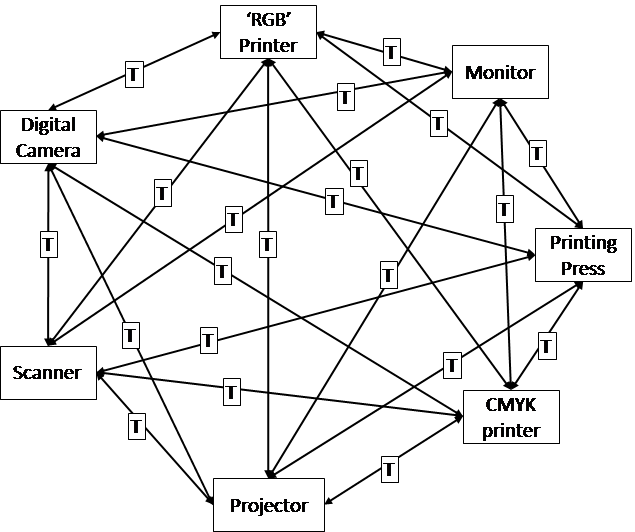
FIGURE 2. EXAMPLE DEVICE-TO-DEVICE TRANSFORM CONNECTION WEB
To simplify things a “hub model” similar to that used by airlines to provide flight options between cities can be utilized. Rather than provide transforms between every device, one only needs to provide transforms between a Reference Colour Space and the encoding used by the device. The transformation from one device to another can then be performed as a two-step process. First the source device encoding in transformed to a reference colour space, and then a transform is used to go from a reference colour space to the destination device encoding (see Figure 3).

FIGURE 3. CONVERSION FROM SOURCE DEVICE ENCODING TO DESTINATION DEVICE ENCODING USING REFERENCE COLOUR SPACE
When additional devices are added to the colour management ecosystem, only an additional transform set is needed for each new device. This approach is shown in Figure 4.
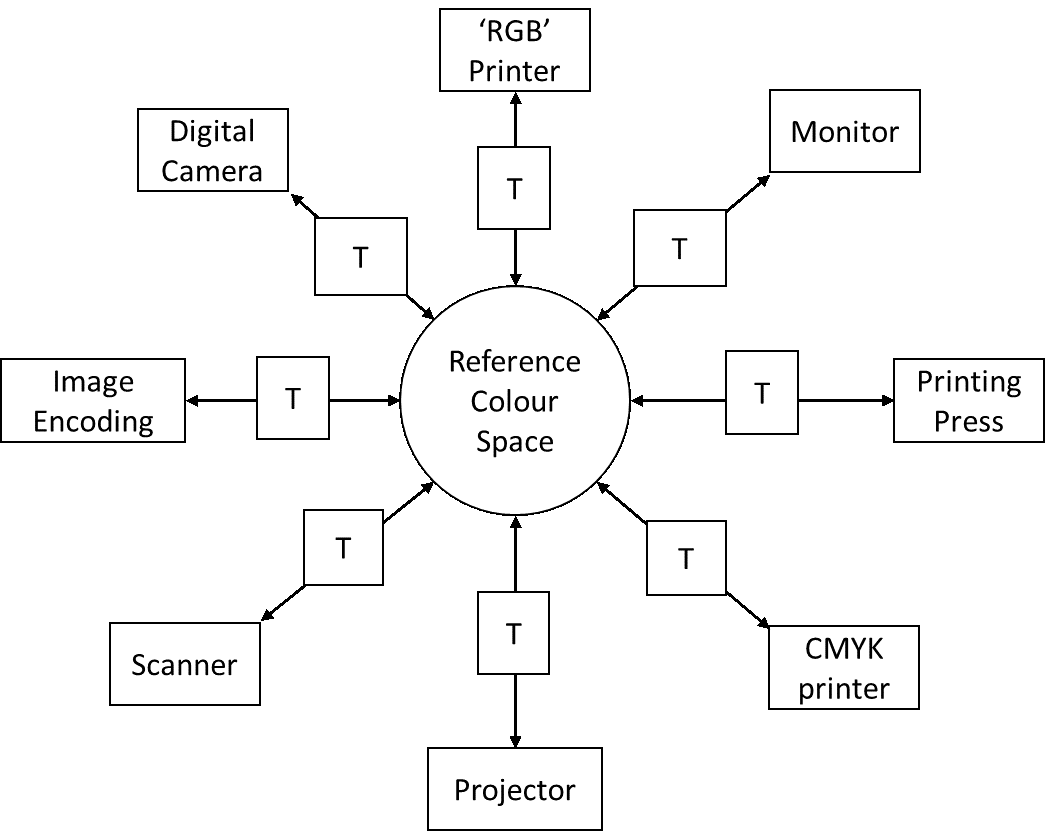
FIGURE 4. INTER-DEVICE COLOUR TRANSFORMATION USING A REFERENCE COLOUR SPACE
Competing proprietary solutions of implementing colour management in such a fashion were in place at the start of the 1990’s with significant interoperability and implementation challenges. As a result of this, key industry players came together to form the International Color Consortium with the goal to develop an open, cross platform, vender neutral approach to colour management based largely on Apple’s Colorsync profiles and colour management architecture.